Pick a name that is easy to say, spell, and search: map your niche keywords, run a YouTube channel name generator for volume, shortlist 20, then test each for pronunciation, spelling, handle availability, and trademark conflicts.
What makes a YouTube channel name brandable and searchable (and where generators actually help)
A channel name has two jobs that pull against each other. It must be findable by someone who half-remembers it and types it into a search bar, and it must sound like something a person would say out loud to a friend. Pure keyword names win the first job and lose the second.
Use these six traits as your scoring sheet before any generator opens:
| Trait | The test it has to pass |
|---|---|
| Sayable | A stranger can repeat it after hearing it once |
| Spellable | Nobody asks "is that one word or two?" |
| Searchable | Typing it returns your channel, not a product or a song |
| Specific | A viewer guesses your topic within a second |
| Scalable | It still fits if you widen your topic in two years |
| Safe | No trademark conflict, no unintended meaning in other languages |
Generators help with exactly one of those: raw volume. They mash seed words, suffixes, and prefixes faster than you can, which breaks the loop where you stare at the same four ideas for an hour. They do not check availability, pronunciation, or legal risk — you do.
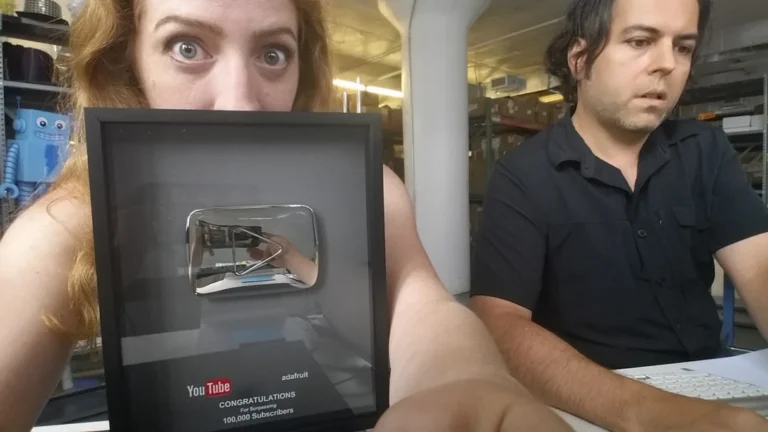
There is one more reason to get this right early. YouTube Help states that a channel must have 100,000 subscribers to apply for a verification badge. YouTube Help also states that once granted, the badge stays on the channel unless the creator changes the channel name.
Step 1 — Map your niche, audience, and the search terms they already type
Time: about 45 minutes. What you need: a spreadsheet, the YouTube search bar, and five channels you consider peers.
Open a blank sheet with three columns: topic words, audience words, and feeling words. Topic words are the literal subject — espresso, Blender, powerlifting, VBA. Audience words describe who shows up — beginner, dad, solo founder, night shift nurse.
Fill the first column using YouTube’s own autocomplete rather than your imagination. Type your topic into the search bar and write down every suggestion that appears before you press enter. Those strings are what real people type, which is the only search data that matters for a name.
Feeling words come from your peers’ comment sections. Scroll the top comments on five channels in your niche and note the recurring adjectives: quick, honest, no-fluff, cozy, brutal. Those words carry the brand half of the job.
Finish with a one-line positioning sentence: "I teach [audience] how to [outcome] without [the usual pain]." Keep it visible. Every name you later consider has to survive being read next to that sentence without looking like a mismatch.
Step 2 — Run a YouTube channel name generator and build a 20-name shortlist
Time: 30 minutes. What you need: your three columns from Step 1 and a timer.
Feed a YouTube channel name generator two or three seed words at a time, not your whole list. Pair one topic word with one audience word, then one topic word with one feeling word. Narrow inputs produce usable output; a ten-word input produces mush.
Run several rounds with deliberately different seeds. Round one: literal topic terms. Round two: the outcome your viewer wants. Round three: an object, animal, or place connected to your subject but not obvious.
Paste everything into your sheet without judging it. Aim for 60 to 80 raw candidates, then cut hard to 20 in a single pass. Delete anything containing a year, the word "Tube," "TV," "Official," "HD," or a number you would have to spell out loud.
Keep a mix in the shortlist: roughly a third descriptive, a third invented or compound words, a third your own name with a modifier. A shortlist of 20 names that all sound the same is a shortlist of one.
Step 3 — Pressure-test each name for brandability: say it, spell it, search it
Time: about an hour for 20 names. What you need: a phone, a voice recorder, and two patient friends.
Say each name into a voice memo as if you were ending a video: "Thanks for watching ___." Names that make you slow down or re-enunciate are dead. Your mouth knows before your brain does.
Run the spelling test next. Read a name aloud to someone who has never seen it and ask them to type it. If two out of three people hyphenate it, add an "s," or split it into two words, cut it.
Search each survivor on YouTube and on Google in a private window. Look for an existing channel with a near-identical name, a product that owns the first page, or a song lyric that buries you. A name you can never rank for your own brand term is a tax you pay forever.
Score the remaining names against the six traits from the first section. Three to five finalists is the right number to carry into availability checks.
Step 4 — Check availability of the @handle, domain, and matching social accounts
Time: 30 to 45 minutes per finalist. What you need: a browser, a private window, and the USPTO search database.
Start with the YouTube @handle, since it is the one asset you cannot buy from someone else. Type the handle into YouTube’s handle field and note whether it is free, taken, or only free with a trailing number. A handle with a trailing digit is a signal to keep looking.
Check Instagram, TikTok, and X next, in that order of importance for most creators. Then check the .com. A clean .com matters less than it did a decade ago, but a .com owned by an unrelated business in your category is a real conflict.
Run a knockout trademark search before you fall in love. In the United States, search the USPTO’s trademark database for your exact name and for close phonetic variants in your category. Fish & Richardson reports that the USPTO charges a flat base trademark application fee of $350 per class of goods or services. Reed Smith reports that the USPTO’s revised trademark fee structure, including the single $350 electronic base filing fee, took effect on January 18, 2025.
Rules differ outside the US — the UK IPO, EUIPO, and other national offices run separate registers and separate fee schedules, and a free US name can be taken in the EU. This is general information, not legal advice; talk to a trademark attorney before filing or before using a name that looks close to an existing mark.
Step 5 — Set your name and handle in YouTube Studio without burning your change limits
Time: 10 minutes. What you need: your final name, your final handle, and a second pair of eyes.
Read both strings out loud one last time, character by character, before you touch Studio. Capitalization inside a compound name — RiverBend versus Riverbend — is worth deciding now, because it shows up in every thumbnail and end screen you ever make.
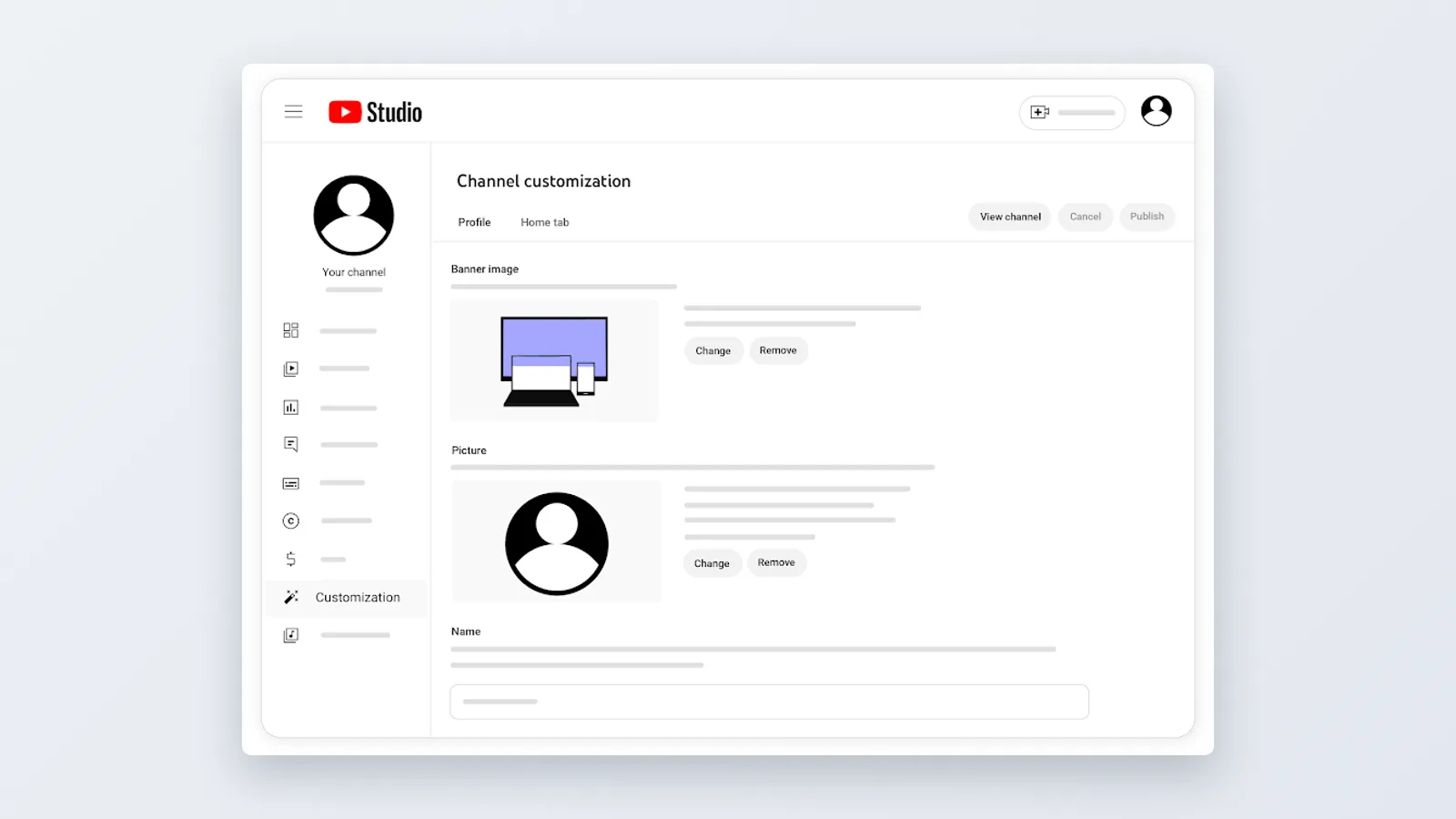
Open YouTube Studio, go to Customization, then Basic info, and edit the name and handle fields together in one sitting. Save once. Then update your banner, watermark, and about section so nothing still references the old name.
The limits are tight, and they are the reason this step comes last. YouTube Help states that you can change your YouTube channel name only twice within a 14-day period. YouTube Help also states that your YouTube handle can be changed only twice within a 14-day period, and that changing the channel name strips any verification badge the channel holds.
Treat those two saves as emergency repairs, not experiments. Testing names by swapping them live is how creators end up locked out of a fix on the day they actually need one.
Pre-launch checklist: 10 boxes to tick before you save your channel name
Work down the list in order. Every box is a yes or the name goes back to the shortlist.
- You can say the name out loud at the end of a video without stumbling.
- Three people typed it correctly after hearing it once.
- A YouTube search for the exact name returns no near-identical channel.
- A Google search for the name returns no dominant product, band, or company in your category.
- The @handle is free with no trailing number.
- Instagram and TikTok handles are free or close enough to be consistent.
- The .com, or a clean alternative you are happy to print, is available.
- A USPTO knockout search in your category turned up no confusingly similar mark.
- The name has no awkward meaning in the other languages your audience speaks.
- The name still makes sense if you widen your topic within two years.
Save a screenshot of your checklist results next to the name in your spreadsheet. Six months from now, when you second-guess the choice at 1 a.m., the record of why you picked it is worth more than the choice itself.
Common mistakes that force creators to rename their channel later
The most common failure is naming the format instead of the subject. A creator launches "ShortsDailyHQ," posts sixty-second clips for a year, then discovers that long-form tutorials earn more watch time and better sponsors. The name now contradicts the content, the audience is confused, and the rename costs every mention, thumbnail, and backlink built so far.
Avoid it by naming the promise, not the delivery mechanism. "Quiet Kitchen" survives a pivot from Shorts to 20-minute videos; "60SecondRecipes" does not.
The other recurring traps are smaller but just as expensive:
- Keyword stuffing. "Best Beginner Guitar Lessons Hub" reads like a search result, not a brand, and nobody recommends it by name.
- A year in the name. It expires on January 1.
- Near-copies of a big channel. You inherit their traffic confusion and none of their goodwill.
- Creative spellings. Dropped vowels and silent letters fail the type-it-back test every time.
- A name tied to one series. When the series ends, the channel looks abandoned.
One more rename risk is worth planning around at the top end. Because YouTube Help states that a verification badge remains on a channel unless the creator changes the channel name, a rename after you cross 100,000 subscribers costs you the badge and a fresh application. Pick a name you can keep.
Frequently asked questions
Can a YouTube channel name generator pick a good name for me?
A generator produces volume, not judgment. It will hand you 60 to 80 combinations in minutes, which beats staring at a blank page, but it cannot check handle availability, trademark conflicts, pronunciation, or whether the name survives a pivot. You still run Steps 3 through 5 yourself.
How many times can I change my YouTube channel name and handle?
YouTube Help states that you can change your channel name only twice within a 14-day period, and that your handle can also be changed only twice within the same 14-day window. Plan both edits in one sitting so you keep a spare change available for genuine mistakes.
Will renaming my channel affect my verification badge?
Yes. YouTube Help states that changing your channel name strips the verification badge, and that a granted badge otherwise remains on the channel. Since YouTube Help also states that applying requires 100,000 subscribers, a rename at that stage means reapplying from scratch rather than keeping the checkmark.
Should I trademark my YouTube channel name?
It depends on your plans for merchandise, courses, or sponsorships in the United States. Fish & Richardson reports that the USPTO charges a flat base trademark application fee of $350 per class of goods or services. Run a free knockout search first, and consult a trademark attorney; this is general information, not legal advice.
Should my channel name include a keyword like "gaming" or "recipes"?
One clear topic word helps new viewers guess your subject instantly, which is useful before you have brand recognition. Stacking three or four keywords does the opposite — it reads like a search result, is hard to say aloud, and locks you into a format you may outgrow within two years.
Sources
- Manage your YouTube channel’s profile – Computer – YouTube Help
- Manage your YouTube channel’s profile – Android – YouTube Help
- Verification badges on channels – YouTube Help
- 2025 USPTO Trademark Fees: What They Mean for Your Portfolio – Fish & Richardson
- USPTO announces trademark fee increases effective January 18, 2025 – Reed Smith
This article was drafted with AI assistance and published by the YouTube Creators Editorial Team after its facts were checked against the sources listed above.